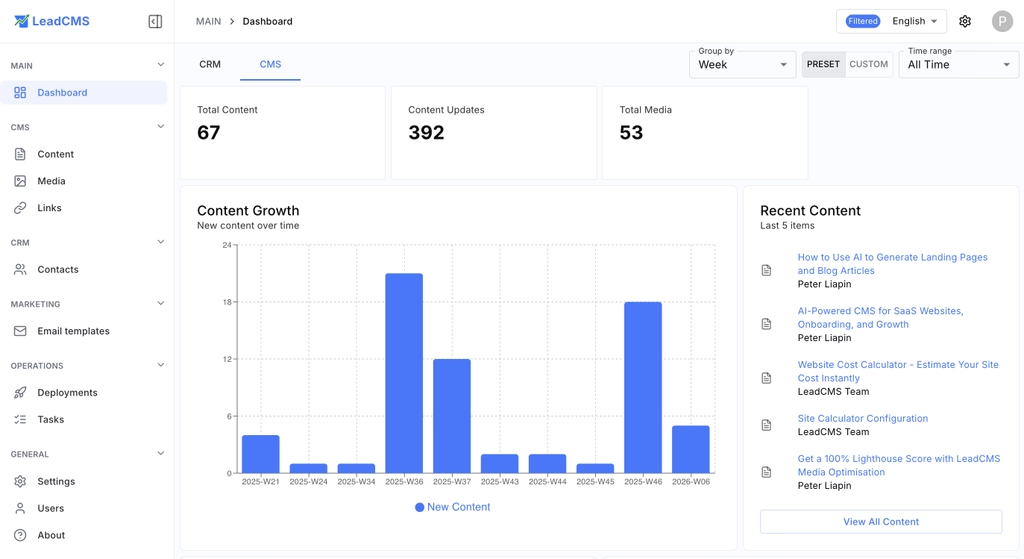

If you are evaluating headless CMS options like Strapi, Payload, Directus, or Orchard Core, you will notice they solve content management well - but they usually stop there. LeadCMS was built for teams that need more than publishing: an AI-first workflow, Markdown and MDX as first-class formats, and a built-in CRM so content can directly drive leads and revenue.
This article summarizes where LeadCMS fits in the headless CMS landscape, what it replaces in your stack, and when it is the right choice compared to the most common alternatives.
Where LeadCMS Fits in the Headless CMS Landscape
After reviewing dozens of modern headless CMS products, LeadCMS ends up at the intersection of three categories:
1) Open-source, self-hosted, API-driven CMSes
If you want an open-source headless CMS you can run yourself, you are likely comparing:
- Strapi (Node.js) - popular and extensible
- Payload CMS (TypeScript/Node.js) - developer-first
- Directus (Node.js) - database-first with dashboards and flows
- KeystoneJS (TypeScript) - code-first and GraphQL-friendly
These are closest to LeadCMS in deployment model and developer expectations.
2) .NET ecosystem CMSes
If your team is .NET-heavy, you may be looking at:
- Orchard Core - powerful, modular, but traditional CMS patterns
- Squidex - API-driven and self-hosted, but intentionally narrow
- Umbraco Heartcore - headless, but primarily a proprietary SaaS offering
LeadCMS competes here because .NET teams often want a modern, API-first CMS without giving up self-hosting.
3) CMSes with CRM, marketing, or AI overlap
A few platforms overlap with pieces of the LeadCMS value proposition:
- Ghost - memberships, newsletters, subscriber management
- dotCMS - personalization and journey concepts
- CrafterCMS - Git-style content and some AI features
- Builder.io - AI-assisted visual building
They each cover part of the stack, but not the full CMS + CRM + AI combination.
The Main Problem With Most Headless CMS Setups
A typical Jamstack stack looks like this:
- Headless CMS for content
- Form tooling for lead capture
- CRM (HubSpot, Salesforce, Pipedrive) for contacts and pipelines
- A newsletter or email tool
- Analytics and attribution tooling
- Image optimization that is often handled by a SaaS CDN
This works, but it is fragmented. Data gets duplicated, integration becomes a project, and it is hard to answer revenue questions like: "Which article drove this lead?" or "Which landing page created this opportunity?"
LeadCMS is designed to collapse that stack.
LeadCMS Differentiators That Matter in Practice
These are the areas where LeadCMS is not just "another headless CMS".
USP #1: The only open-source CMS + CRM in one package
LeadCMS includes a built-in CRM layer (contacts, accounts, lead scoring, pipelines) instead of pushing you toward external systems for the core customer journey.
That matters when you want content to connect directly to outcomes:
- Capture leads from your site
- Track contacts and their activity
- Move deals through a pipeline
- Connect revenue back to the content that created it
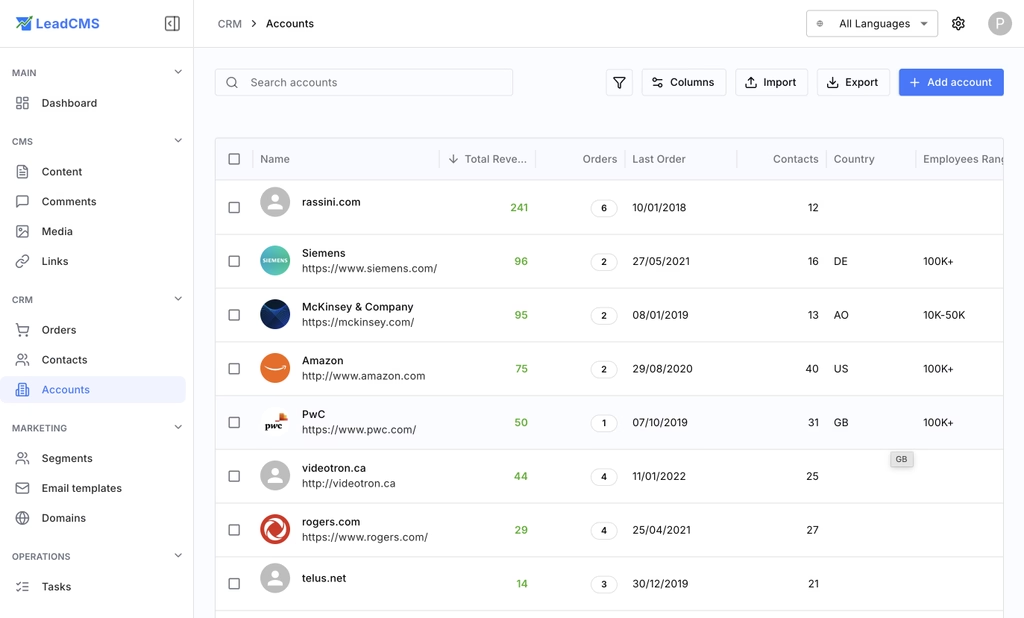
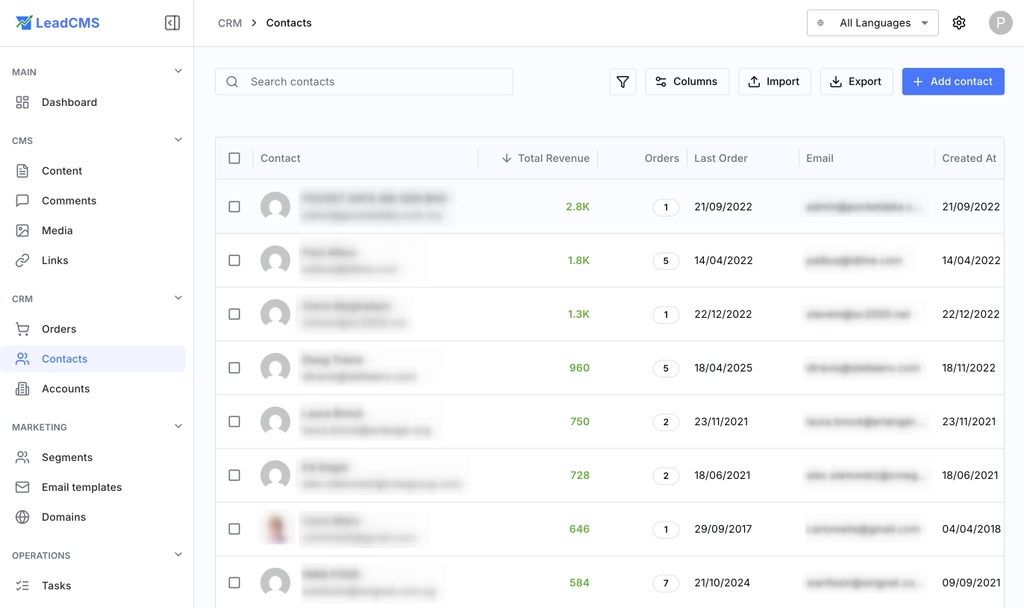
LeadCMS is built for teams that need to turn content into revenue - not just publish pages.
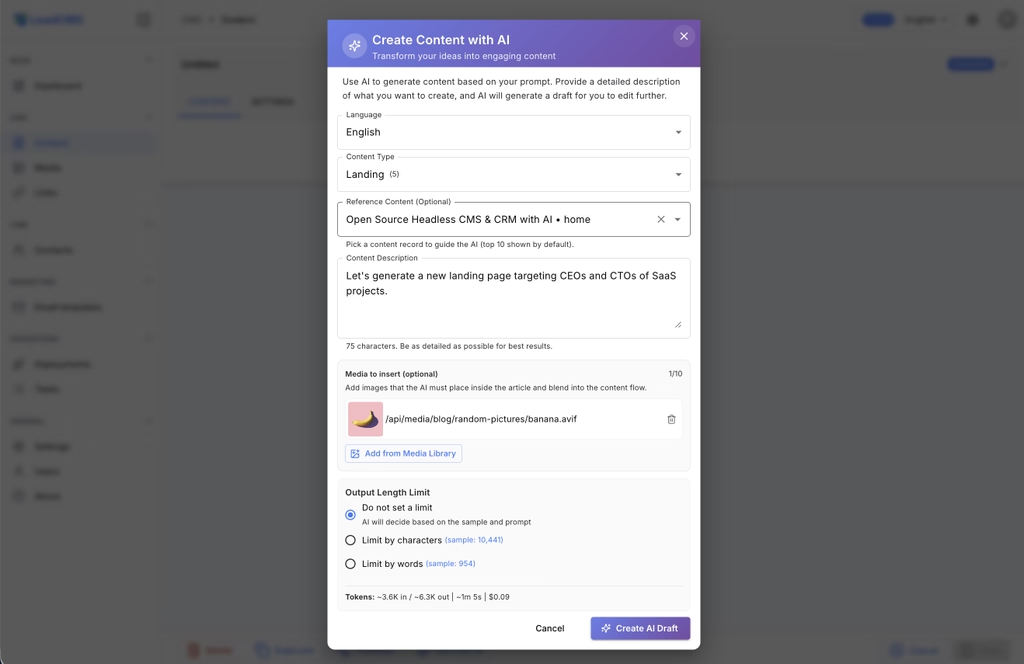
USP #2: AI-first content generation that understands your structure
Most AI writing tools produce generic Markdown. In real sites, content needs to match your templates, your sections, and your allowed components.
LeadCMS AI is structure-aware. It can generate MDX that fits your site because it understands your content types and the MDX component allowlist.
This reduces two common bottlenecks:
- Editors do not have to clean up broken formatting
- Developers do not have to fix content that does not match the page structure
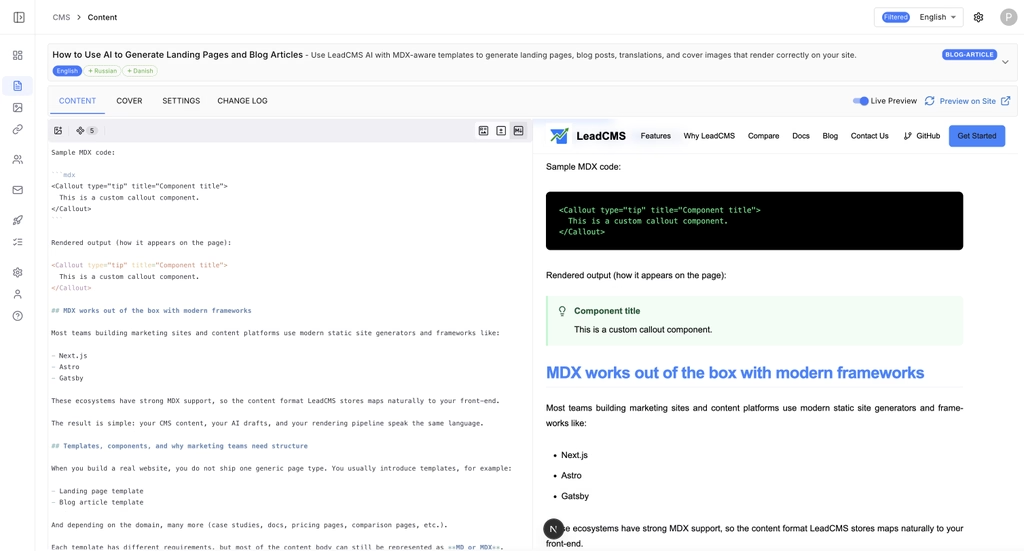
USP #3: Markdown and MDX-native with live preview
LeadCMS treats Markdown and MDX as first-class formats, which is ideal for modern developer workflows and content-as-code practices.
On top of that, it supports live preview for static sites, so editors can see changes in context while keeping a fast Jamstack delivery model.
USP #4: Git-style CLI for content sync
LeadCMS provides a pull/push workflow with conflict resolution so developers can treat content updates like code changes.
This helps teams bridge the developer/editor gap:
- Editors work in the Admin UI
- Developers sync content with a familiar CLI flow
- Teams avoid accidental overwrites and messy manual exports
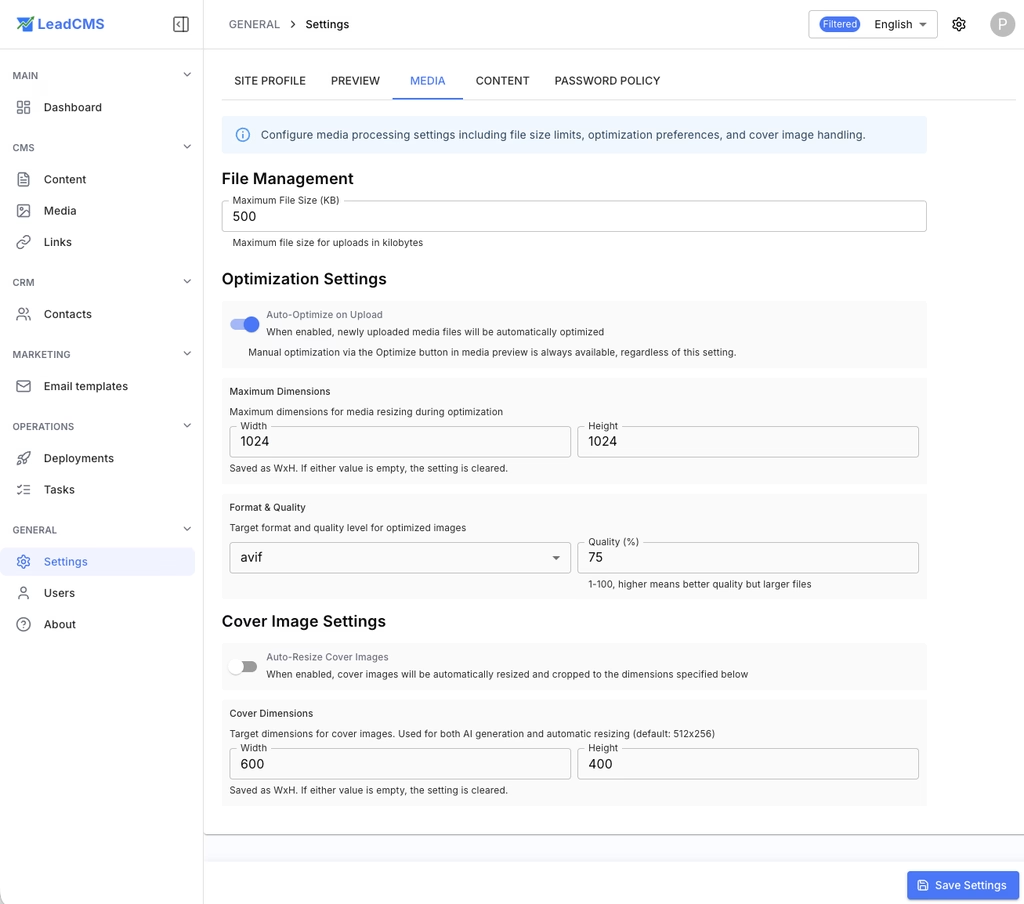
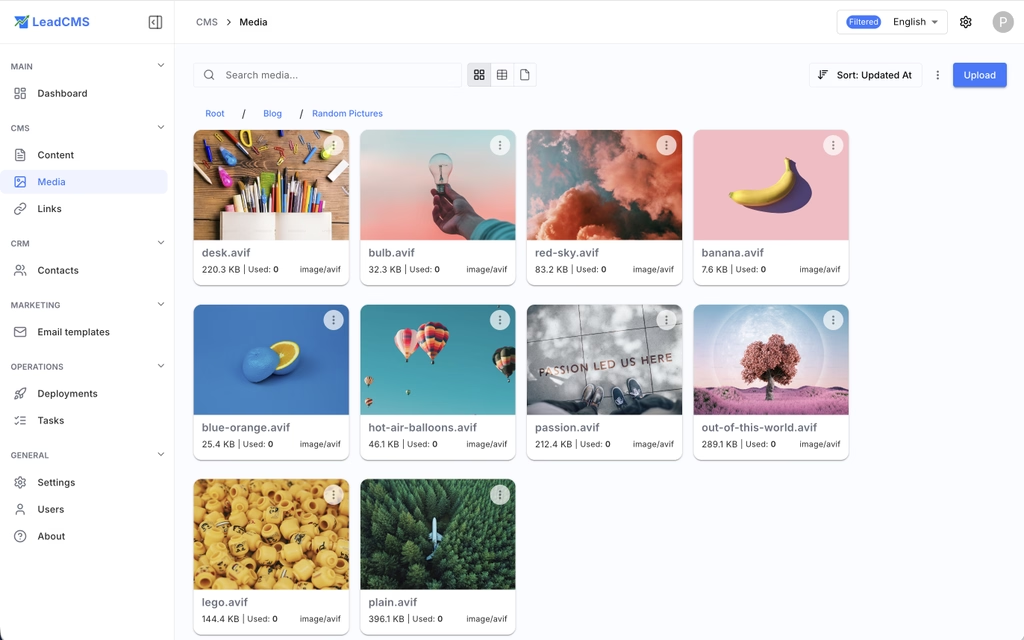
USP #5: Built-in media optimization pipeline
Many platforms rely on SaaS image CDNs. LeadCMS includes self-hosted media optimization, including modern formats like AVIF/WebP, and the operational details that matter (like reference tracking when renaming or moving media).
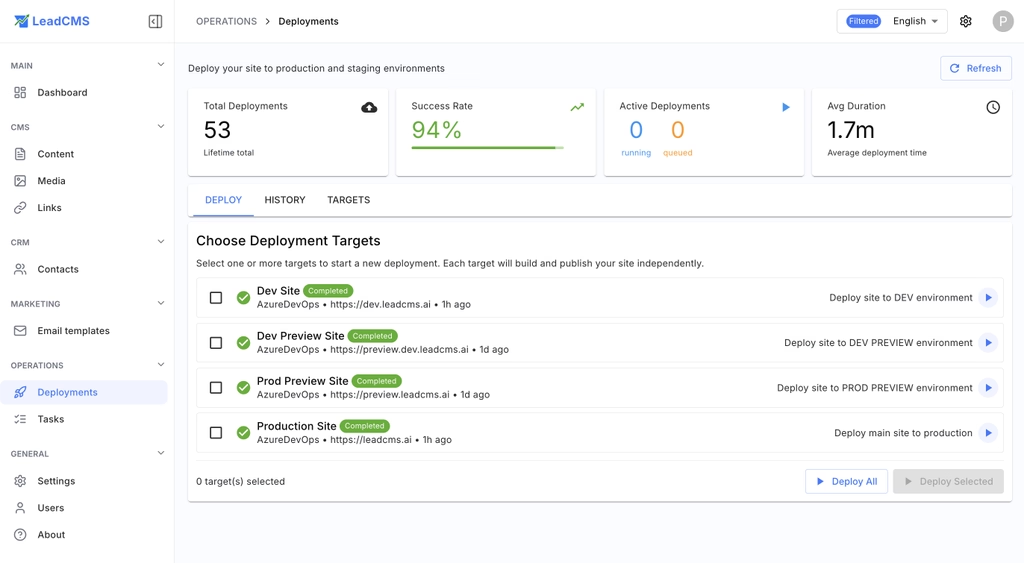
USP #6: One-click deployments from the Admin UI
Instead of "just webhooks", LeadCMS focuses on deployment as part of the content workflow: content teams can deploy to dev/preview/production without waiting on engineering.
LeadCMS vs Strapi vs Payload vs Directus: Quick Comparison
Here is the practical difference when you compare the most common open-source headless CMS options.
LeadCMS vs Strapi
Strapi is a strong general-purpose open-source headless CMS with a large ecosystem.
LeadCMS is a better fit when you need:
- Built-in CRM (not integrations)
- AI generation aligned to your MDX components
- Markdown and MDX workflows with live preview
- A unified content-to-revenue story
LeadCMS vs Payload CMS
Payload is developer-first with excellent TypeScript ergonomics.
LeadCMS is a better fit when you want:
- CMS + CRM together
- Structure-aware AI for production-ready content
- A more explicit content-as-code workflow via CLI sync
LeadCMS vs Directus
Directus is compelling for database-first projects and internal tools.
LeadCMS is a better fit when your priority is:
- Editorial workflows for modern websites (Markdown/MDX)
- AI-assisted content production
- A built-in CRM tied to your website content
If your core goal is building an internal admin layer over an existing SQL database, Directus can be a great choice. If your goal is publishing content that drives leads and revenue, LeadCMS is designed specifically for that workflow.
Strategic Direction: What LeadCMS Is Optimized For
This section is a short product manifest: what LeadCMS is, what it is becoming, and what it will not try to be.
What LeadCMS is
LeadCMS is an open-source, self-hosted headless CMS built for modern website teams.
It is optimized for:
- MDX-first content that matches real templates and components
- AI-assisted workflows that produce output your site can render
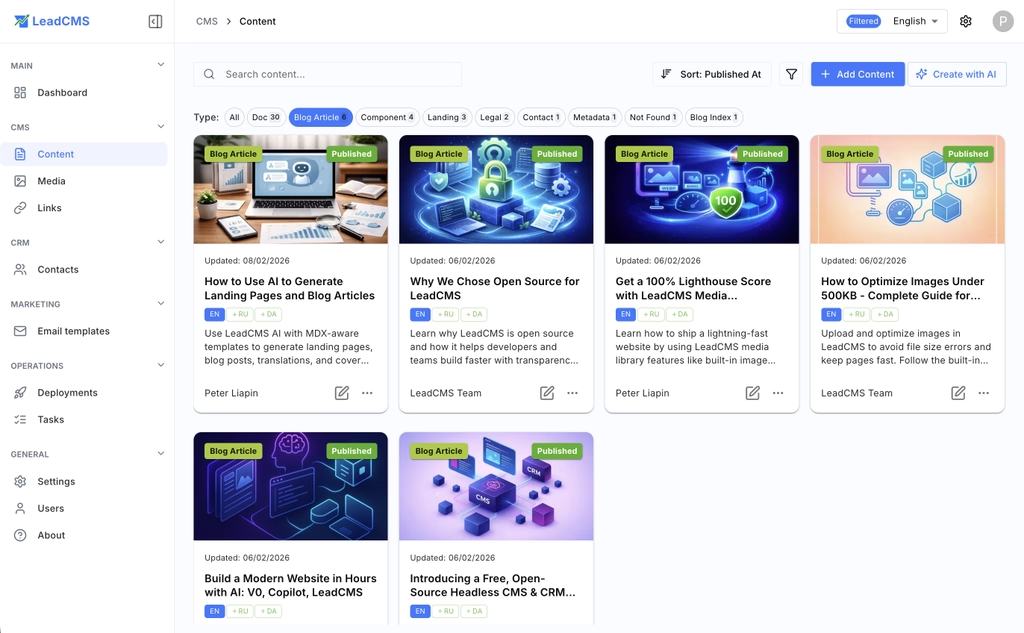
- A built-in CRM (contacts, accounts, pipelines) so content ties back to leads and revenue
- Fast publishing loops with preview and deployment as part of the editor workflow
What LeadCMS wants to become
Over time, LeadCMS aims to be the most practical way to run a content-to-revenue website stack without stitching together five different tools.
That means doubling down on:
- A native content-to-CRM loop: connect pages, forms, and events to contacts and outcomes
- AI as a workflow, not a button: outlining, drafting, updating, translating, and reusing structure safely
- Developer and editor collaboration: keep MDX structure predictable, keep preview fast, keep sync workflows clean
- A modern choice for .NET teams: API-first delivery, self-hosting, and a clear integration story for .NET applications
What LeadCMS will never do (by design)
Some directions are tempting, but they weaken the core value.
- It will not become a visual drag-and-drop page builder - LeadCMS is built around structured MDX and repeatable templates
- It will not go SaaS-only - open source and self-hosting stay first-class
- It will not optimize for generic internal admin panels - LeadCMS is for publishing workflows and customer journeys, not a database GUI
- It will not chase every CMS feature checklist - focus stays on CMS + CRM + AI and the end-to-end publishing loop
Summary
LeadCMS is not trying to be a generic headless CMS. It is positioned as an open-source, self-hosted, AI-first CMS that includes a built-in CRM.
If you want to ship faster, keep a clean content-as-code workflow, and connect content directly to leads and revenue, LeadCMS is designed for that exact use case.